ideas · 25 August 2026
Prägnanz
The Gestalt idea that apparently disparate elements can resolve into a coherent underlying form. The pattern only becomes visible in retrospect.
A life oriented toward the living world, an early sense of arrival, a long fall, the slow work of return, and the decision to begin again.
I was born in Dublin and grew up on Sydney’s northern beaches. The family church was St Francis of Assisi. Dual Catholic formation, Roman and Liberal Catholic, carried both the sacramental and the mystical. The Liberal Catholic side, with its roots in the Theosophical Society and the nineteenth-century encounter with Eastern thought, led into the Order of the Round Table and its Arthurian ideal of service. Catholic schooling was followed by Steiner. The culminating main lesson was Wolfram von Eschenbach’s Parzival. A lasting gift of Steiner education was the habit of seeing things in wholes, relationships and patterns rather than isolated parts. I would later come to think of myself as a systems thinker. None of this looked like a pattern at the time.
After school I travelled through Europe, the Middle East, and Africa. Later I studied biological sciences at James Cook University in Townsville. My major was Botany and Tropical Soils/Agriculture. From Townsville, within a day you could be in the tropical savanna, on the Great Barrier Reef, or in the Wet Tropics World Heritage Area. It was hard not to feel a sustained sense of wonder at the living world. It was not an abstract idea. It was the daily context of study and work. That same period taught me something else. In the military I learned that service was mostly ordinary: turn up, know your job, carry your weight, and be useful when someone else was having a bad day.
In my early twenties I found deep ecology. By twenty-five I thought I had arrived. No major obligations, plenty of time. I experienced the ecological Self, the expansion of identity beyond the individual ego into the wider living world, as the top of Maslow’s pyramid. Self-actualisation felt done. The Grail, it seemed, had been sighted early.
It hadn’t. Two significant relationships ended and left me damaged. Seven years followed as a single man. There were periods of hedonism, drink, and drugs, but that was not the whole picture. I still ran businesses, employed people, and took those responsibilities seriously. What was missing was insight into my own character, strengths and vulnerabilities. That insight came slowly. In time my wife and I chose to have four children. Fatherhood replaced the earlier freedom with a harder question: what do I actually owe these particular human beings? Providing for them was not a distraction from ecological consciousness. It was a moral act in its own right.
Professional life moved into sustainability and ecological ventures. There were tastes of success. There was also a pattern of taking larger and larger risks, justified by the belief that the work was selfless and for the biosphere. I signed letters “For the Earth, Yours in Sustainability.” Investors who lost money and critics who watched the pattern took umbrage. My wife put it more plainly: a Superman complex. At times, when others failed to carry what they had undertaken, my instinct was to step in and save the situation myself. That instinct could look like service, but it also fed what Jung described as inflation: the ego identifying with the superior figure. The shadow did not appear only as selfishness. It could hide inside the virtue itself: service, ambition, saving the Earth. The problem was not the service. It was that the moral weight of the cause could become an excuse to ignore ordinary prudence.
There had already been many challenges. COVID was the final straw that brought the business down. The position on Maslow’s hierarchy dropped hard toward the base. Shelter has remained uncertain. The weekly pressure of rent and the loss of any real safety net have taken a toll on mental health and limited the simple ability to be in nature. Material security shapes what kind of ecological consciousness is even possible. The version available to an unburdened twenty-five-year-old cannot simply be expected of someone trying to keep a household going. Because I once had that earlier freedom, I know what has been lost. I also understand better those who have to provide and survive.
I come from a long line of alcoholics. Today marks four years sober. It is the first day of the fifth year, and it feels the right time to put this down. The tide has been going out since late 2019, a seven-year ebb that quietly mirrors an earlier cycle. It has turned and is coming in.
The work of these years has been letting go, forgiving others, and forgiving myself. The result is the ability to start again with eyes open. The form of deep ecology I embraced at twenty-five has not been enough. Its recognition of the intrinsic value of the non-human world is still necessary. As I understood it, though, it tended to treat ordinary human flourishing, family, and provision as secondary. That was not sufficient for the life that had to be lived.
So I have come back, not as someone swapping one absolute for another, but as someone who has tested the earlier view against life. The Genesis dominion story and Lynn White’s critique of it once seemed good enough reason to set the Christian foundation aside. Experience has complicated that. The same tradition that can be read as a licence for exploitation also contains Francis of Assisi, the figure White himself pointed to as the alternative. Francis offers humility, creatureliness, kinship with the non-human world, and an acceptance of limits. In that way he answers both the ecological question and the earlier inflation. Laudato Si’ continues that ecological tradition. Beliefs shape behaviour. Or, as we used to say in Zingspace, borrowing a line familiar from Monkey, “With our thoughts we make the world.” I have watched that play out over decades.
The journey to self-actualisation starts again today. The climb back up Maslow’s pyramid now carries the knowledge of limits, the weight of responsibility, the memory of inflation and collapse, and the quieter disciplines of acceptance and forgiveness. The Grail is not possessed. It is approached again with clearer sight. The hero and the shadow are both acknowledged. Success and failure have been lived. Rebirth has been slow and incomplete. Starting again is the present tense of the work.
Prägnanz
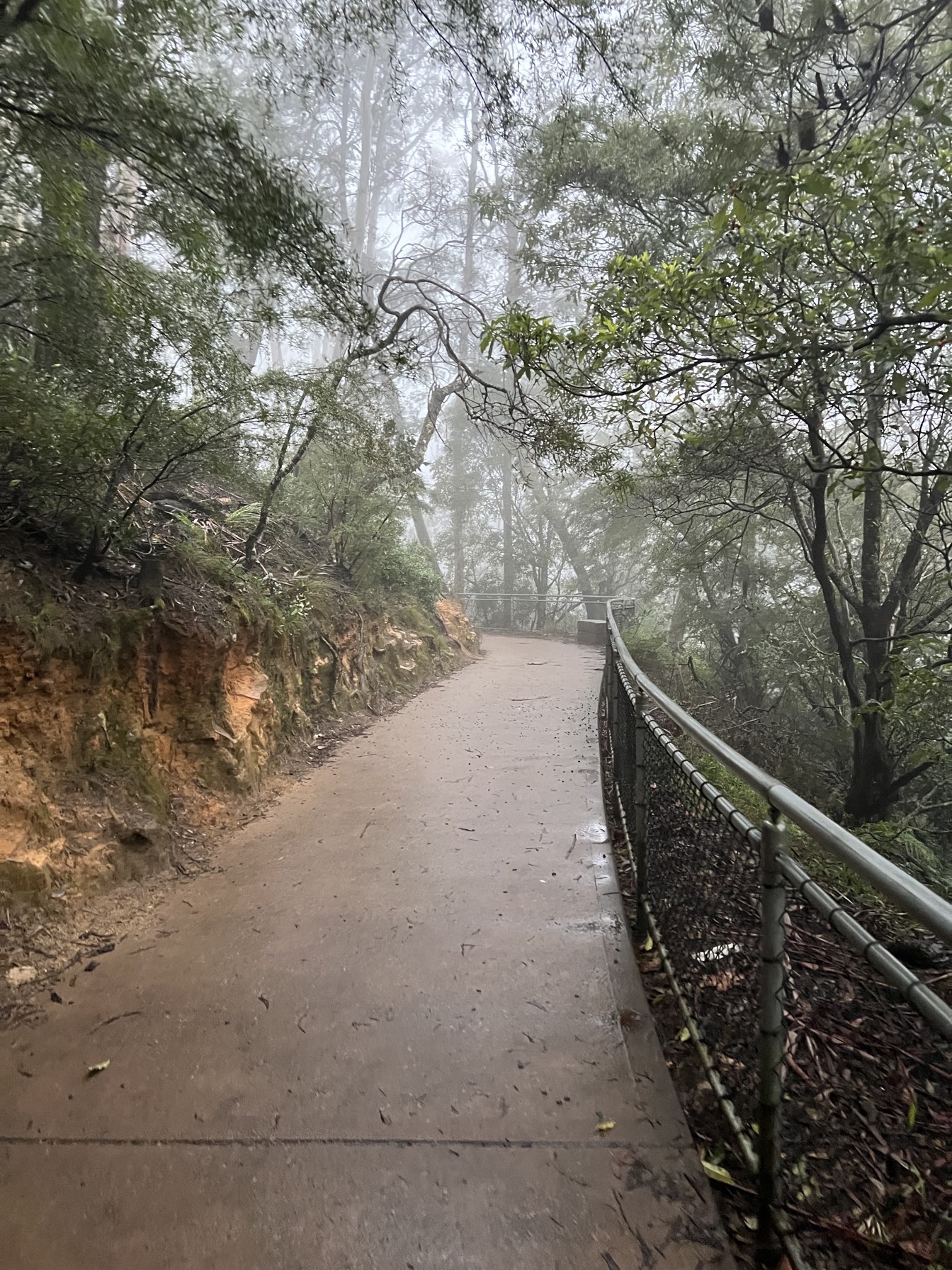
What only becomes clear after the journey is that the Grail was never just ecological transcendence. It was the holding together of Earth, self, shadow, responsibility, family, and service. The twenty-five-year-old could not have seen that. He had not yet lived the experiences that would test the philosophy. Human flourishing and ecological flourishing cannot ultimately be separated. A philosophy that sacrifices one eventually fails the other. The pattern is the quest. The task is to keep walking.
Nigel Grier · 25 August 2026 · Updated 25 August 2026
If this resonates, take a next step
Start free with the diagnostic, book a working session, or send a brief about the decision in front of you.